Spring 2025 Highlight: Daisy Studio
(American, active ca. 1940-47)
Portrait series
8 silver gelatin prints, 1941-46
Gift of Näkki Goranin
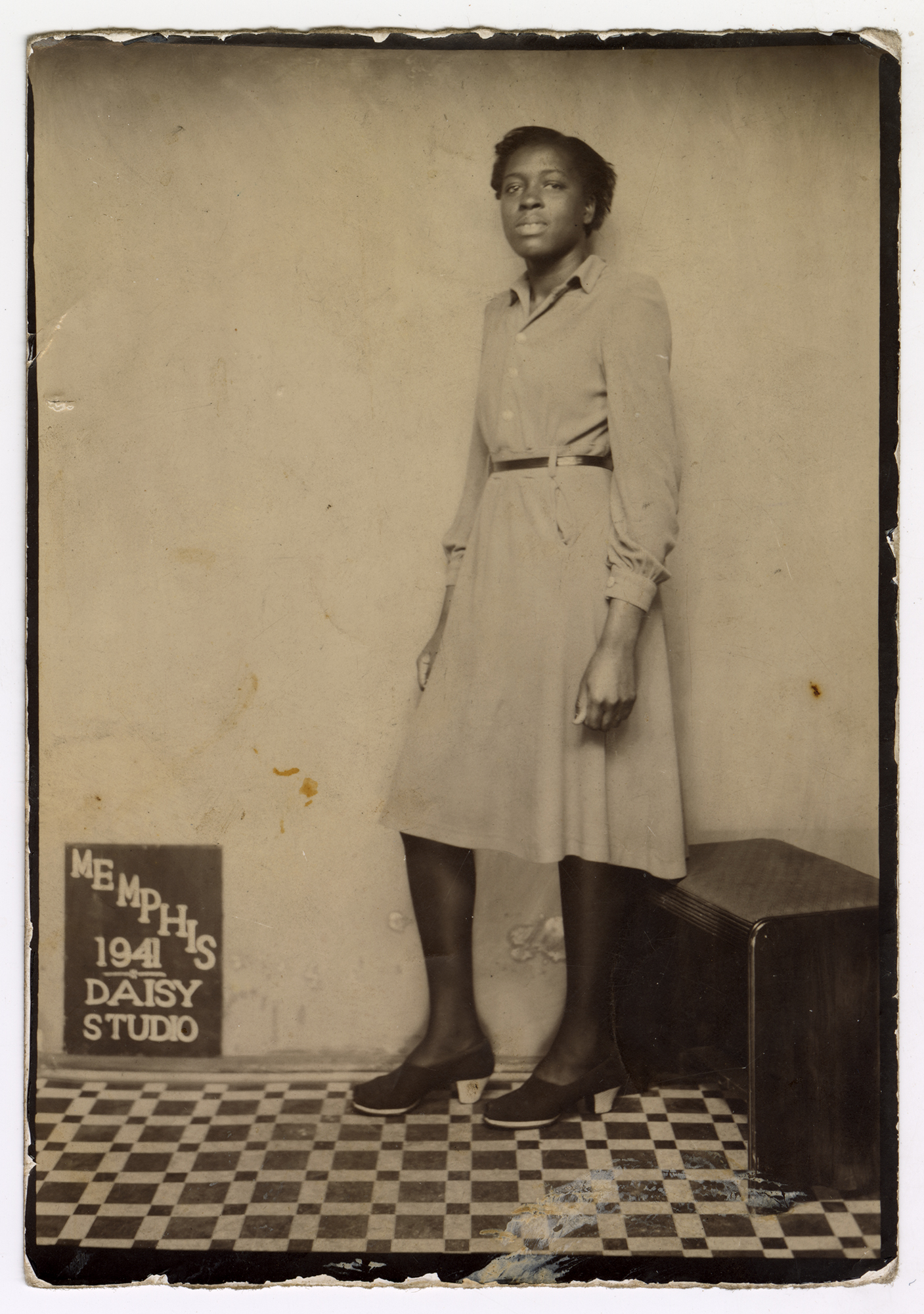
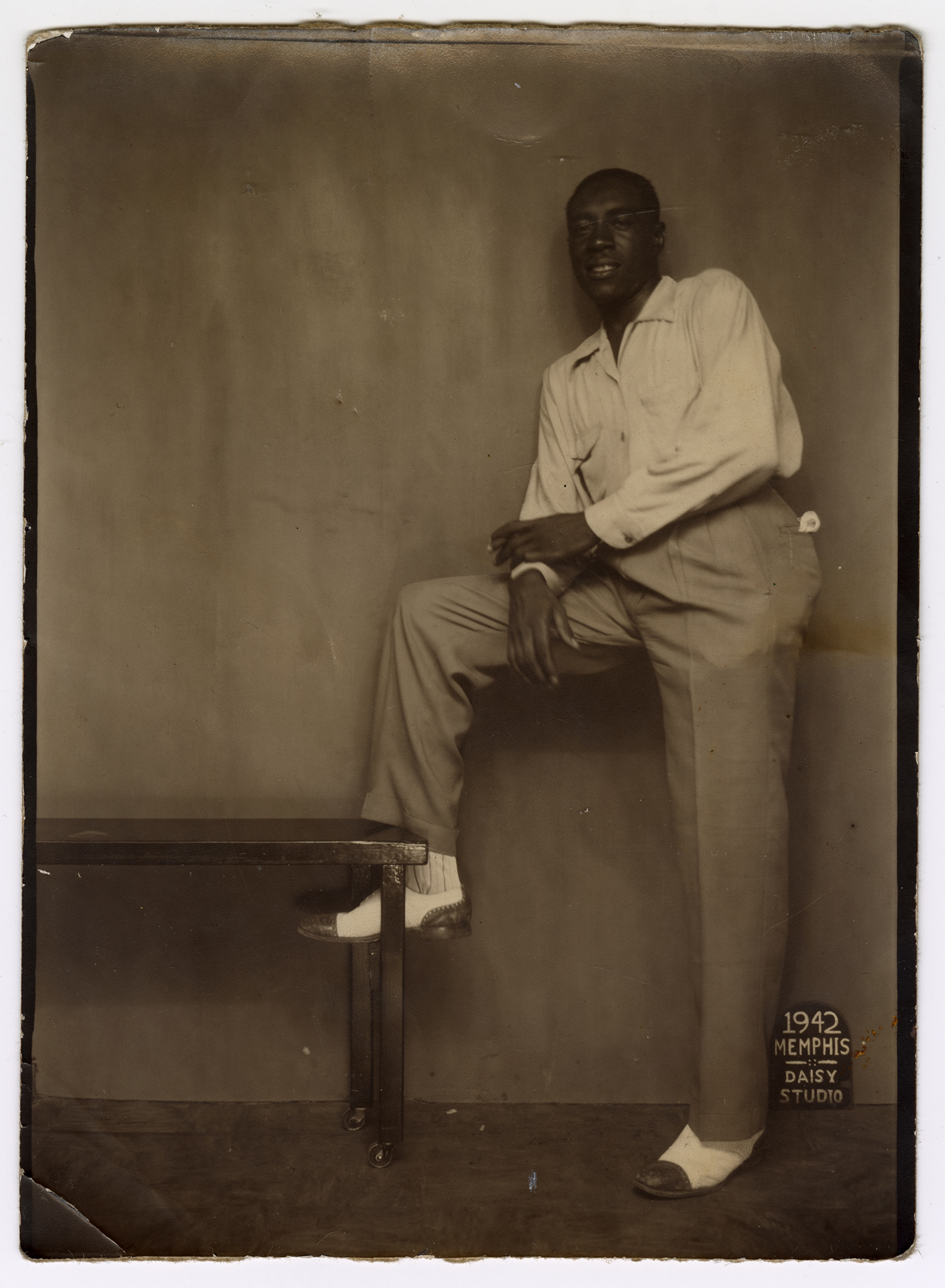
Beale Street in Memphis has long been known as the home of the blues. W. C. Handy wrote “Beale Street Blues” there in 1916, and in the 1920s and ‘30s Beale Street saloons hosted Louis Armstrong, Furry Lewis, Memphis Minnie, and other Black blues musicians. But by the 1940s, Beale Street was in decline. Amid the theaters and dive bars was an inauspicious but popular photographer’s storefront known as Daisy Studio. There, customers could get their postcard-size portraits made quickly and inexpensively, with a direct-positive film like that used in photobooths.
The eight photographs in the CPW Collection are all black-and-white, full-length portraits, with the distinctive dated Daisy Studio signage in the corner. In other ways they are also typical of known products from the studio. They all depict Black subjects, many of whom seem to be dressed for a night of partying. There are men drinking and crowding into the space with their buddies. There are also demure women and even school children, all in an unadorned studio with bad lighting and a single chair.
Little is known about the Daisy Studio, but based on Memphis city directories the proprietor seems to have been John H. Hall (1898-1957), a white photographer originally from Pennsylvania. Hall operated the Daisy Studio at 315 Beale during World War II, from about 1940 to 1947. Advertising in the program for the 1940 Memphis Cotton Makers Jubilee, Daisy Studio offered “Full length post card size, 3 for 50c.”
The Daisy Studio photographs were donated by Näkki Goranin, author of American Photobooth (2008), whose collection was exhibited at CPW in 2023.