
B. MILWAUKEE, WI, 1995; LIVES IN MILWAUKEE, WI
Billie Carter-Rankin often notes that a formative influence on her visual sensibility was the experience of viewing family photo albums with her grandmother. While perusing snapshots, her grandmother would recall past events and cite family lore. When her grandmother suffered from memory loss and dementia, Carter-Rankin became fascinated by absence and loss and she began to investigate how photographs fade and deteriorate over time.
In her series of altered photographic works, including “Congratulations Michael” and historical photographs obtained from the Library of Congress, Carter-Rankin experimented with the physical state of the print. She reproduced the family photos she had studied with her grandmother and overpainted them with Kodak selenium toner, which simulates deterioration and allows time and chance to create change. This act of darkroom processing initiates an absence of visual information that simulates memory loss. Carter-Rankin has said, “In my work, I directly consider the process of remembering through family archives and darkroom processing. I manipulate chemicals used to increase image permanence, to slowly deteriorate an image over time. Although its original physical form decays, the desire to remember still remains, and we are left to make sense of the fragments. Our family photographs, originally meant to function as a site of memory, are transformed into sites of forgetting.”
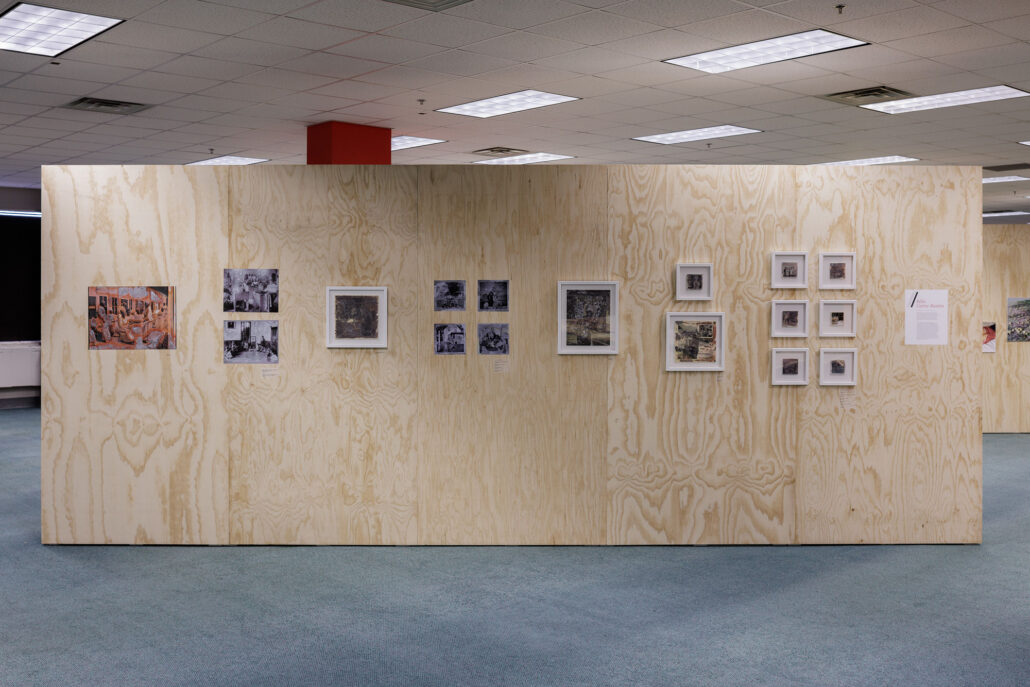
This installation is part of the exhibition Parallel Lives: Photography, Identity, and Belonging, curated by Maya Benton. Parallel Lives draws attention to complex notions of community and belonging, and in particular how our social and familial relationships have been reimagined as a result of the conditions of isolation and uncertainty imposed by the Covid-19 pandemic.