
curated by Lesley A. Martin
July 24 – August 29, 2010
The artists presented in Part 2: The New Docugraphics are driven by a different set of aesthetic criteria and motivating factors from those in The New Skew.
For the most part, the photographers in The New Docugraphics are concerned with how to best depict and describe the world around us, focusing on specific sociological issues and observations. And while this particular set of photographers puts us in touch with the most timely and topical issues of our day, they are hardly traditional documentarians according to the old-school conventions of the genre. Foregoing the aesthetics of traditional photojournalism, these photographers have opted for approaches that have more in common with the conceptually driven photographers of The New Topographics than with old-school Magnum Photos.
[expand title=”Continue Reading…” notitle=”true” startwrap=”” endwrap=””]
This now-historic movement of The New Topographics has been described as signaling “the emergence of a new photographic approach [in which] romanticization gave way to cooler appraisal” and also as “more attuned to conceptual concerns of the broader art field.” These aspects of the New Topographics inform all of the artists here to some degree. The critical difference— however, is that despite the mostly restrained aesthetic approach, each artist also injects a personal or “concerned” approach, accomplishing a hybrid of the “cool’ and the subjective—the topographic and the personal, the broadly documentary and the particular.
In Mike Mergen’s series on voting sites in the United States, for example, we are asked to consider the context for American democracy in action—the voting booth—situated in locations ranging from the sublime to the absurd. Brook Reynolds presents a catalog of vacant and abandoned sites of gasoline stations as a meditation on our dependency on fossil fuels; Thomas Gardiner isolates a handful of iconic details, contemplating the social landscape of our neighbor to the North (Western Canada); and Eric White depicts the disarmingly peaceful border between the U.S. and Mexico. Christina Seely seductively draws our attention to the most “highly illuminated regions on the NASA map of the night earth,” as a way of provoking thought about energy consumption in urban centers. For the most part, all of these images utilize to the fullest the coolly descriptive potential of panoramic and medium- and large-formats.
Jennifer Wilkey and Tony Chirinos both address issues that dovetail with concerns over healthcare of family and in general, bringing us closer to consider, as Chirinos puts it, “the defenselessness of an individual’s life.”
Cynthia Bittenfield collates a selection of notes and ephemera, including medals, left behind by a young suicidal soldier, along with images that capture the traces of his life – almost evidentiary in nature, but deeply emotional as well.
Natan Dvir presents a sympathetic examination of young Arabs in Israel and their conflicted identity, using the project as a foil against which to explore his own identity as an Israeli. At the furthest end of the subjective scale, Heather M. O’Brien, reflects on the ways in personal images, via their “surface structure” become, in their own way, magical.
Magic backed by precision; restraint matched with seriousness of purpose and personal commitment – this counterintuitive combination defines, to a large degree The New Docugraphics.
-Lesley A. Martin, Publisher and Director of Content, Aperture Foundation
—
Lesley A. Martin is publisher of Aperture Foundation’s book program and director of content for the Foundation as a whole. She has edited over sixty-five books of photography, including Reflex: A Vik Muniz Primer; My Life in Politics: Tim Davis; Istanbul: City of a Hundred Names by Alex Webb; Richard Misrach: On the Beach; Beate Gütschow: LS/S; Paris • New York • Shanghai by Hans Eijkelboom; and The Edge of Vision: The Rise of Abstraction in Photography by Lyle Rexer. Martin is also the coauthor of two volumes on design, Graphicscape: Tokyo and Graphicscape: New York; and a contributing editor to Full Vinyl: The Subversive Art of Designer Toys and Japanese Photobooks of the 1960s and ‘70s.
[/expand]
[av_one_half first av_uid=’av-gstyvu’] Cynthia Bittenfield[/av_one_half]
[av_one_half av_uid=’av-fx82dm’]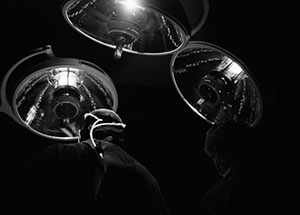 Tony Chirinos[/av_one_half]
[av_one_half first av_uid=’av-ee1ebe’] Natan Dvir[/av_one_half]
[av_one_half av_uid=’av-1bb0ve’]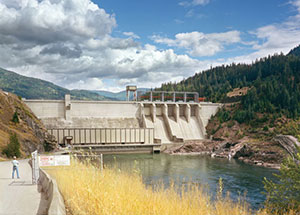 Thomas Gardiner[/av_one_half]
[av_one_half first av_uid=’av-bfadju’]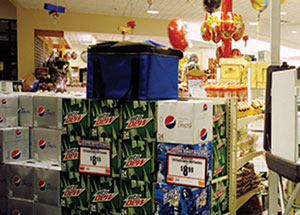 Michael Mergen[/av_one_half]
[av_one_half av_uid=’av-93ntx6′]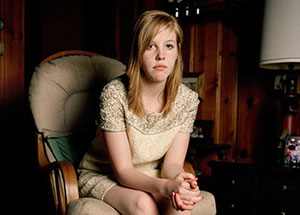 Heather M. O’Brien[/av_one_half]
[av_one_half first av_uid=’av-7kvqju’]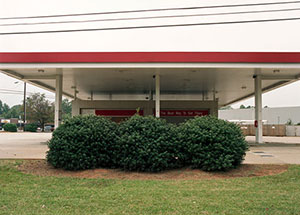 Brook Reynolds[/av_one_half]
[av_one_half av_uid=’av-62zkve’]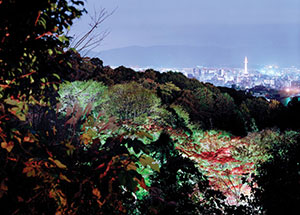 Christina Seely[/av_one_half]
[av_one_half first av_uid=’av-3t96y2′]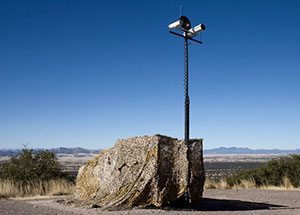 Eric White[/av_one_half]
[av_one_half av_uid=’av-884q2′] Jennifer Wilkey[/av_one_half]