
Race, Love, and Labor (an excerpt)
January 14 – March 19, 2023
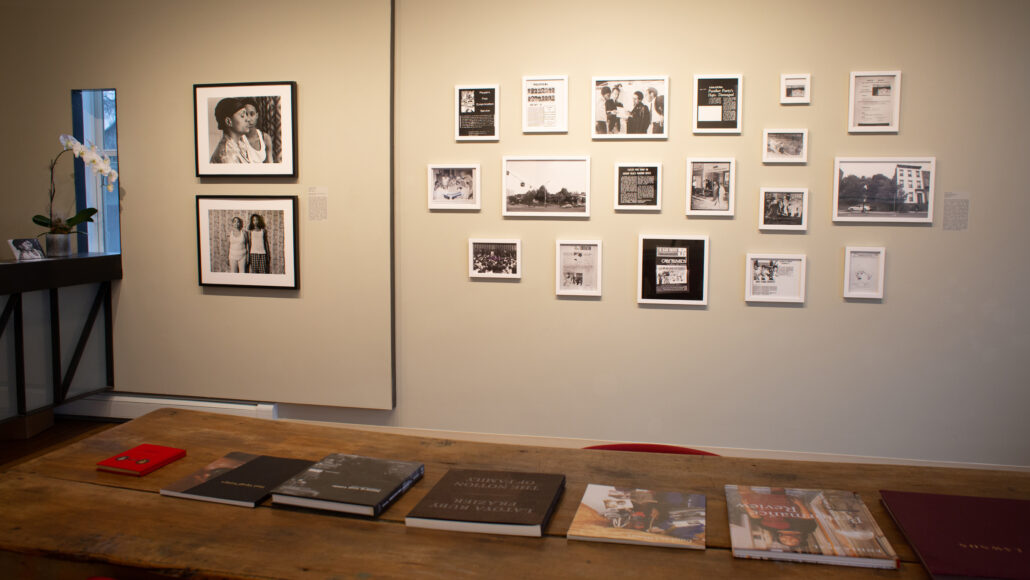
Race, Love, and Labor (an excerpt) is a group exhibition of artists who completed Woodstock AIR, CPW’s acclaimed Artist-in-Residency. This is a re-presentation of the landmark exhibition first organized by noted art historian Dr. Sarah Elizabeth Lewis. This exhibition is a partial reconstruction —an excerpt—of an earlier project organized by Dr. Lewis, associate professor of History of Art and Architecture and African and African American Studies at Harvard University and founder of the Vision & Justice Project, and originally shown at the Samuel Dorsky Museum of Art at SUNY New Paltz in 2014.
It is impossible to separate the history of photography from the history of labor, love, and race in America. At the advent of photography, a deal was struck: the medium would document both the intimacies we cherish and their cost in human toil. It is a paradox that Frederick Douglass would remind us of during the Civil War: photographs were instruments used to erase part of the human family and it would take images of human dignity and determination to rectify it. The labor of photography is to wrestle with this legacy. It is not work but labor: a means through which we birth ourselves anew.
This exhibition, culled from the collection of the Center for Photography at Woodstock’s Artist-in-Residency program, displays images by artists who understand the needs of labor in the fullest sense of the word. They are part of a twenty-year-old tradition at the Center for Photography at Woodstock, which offers artists of color one of the requirements for a sterling creative practice—an embryonic time to probe deeply, unfettered by distractions. In this exhibition, we not only honor this residency but also highlight the themes that have emerged from the resulting, irreplaceable pictures. What unites these images is an animating sense of what it means to live in this lineage of photography’s paradox—to reduce and to exult. These photographs, the gift of a moment in time through a unique residency, show us where a future path may lead.
–Sarah Elizabeth Lewis, Curator
About the Artists (texts by Adam Giles Ryan, CPW Curatorial Assistant)
Endia Beal
American, born 1985
9 to 5, 2014
HD video, sound (3 minutes)
HD video, sound (3 minutes) In this short video, Endia Beal presents interviews she conducted with women of color that have careers in various office environments. Beal was struck by the similarities in the women’s stories: they each share personal experiences with ignorance, prejudice, and racism in a corpoorate workspace. By bringing them together, Beal allows the women to speak with one voice. Since she created this work during her 2013 residency, 9 to 5 has only grown more relevant and timely, especially in the wake of the anti-racism and MeToo movements, which have made visible the prevalence of such workplace harassment.
William Cordova
American, born Peru, 1969
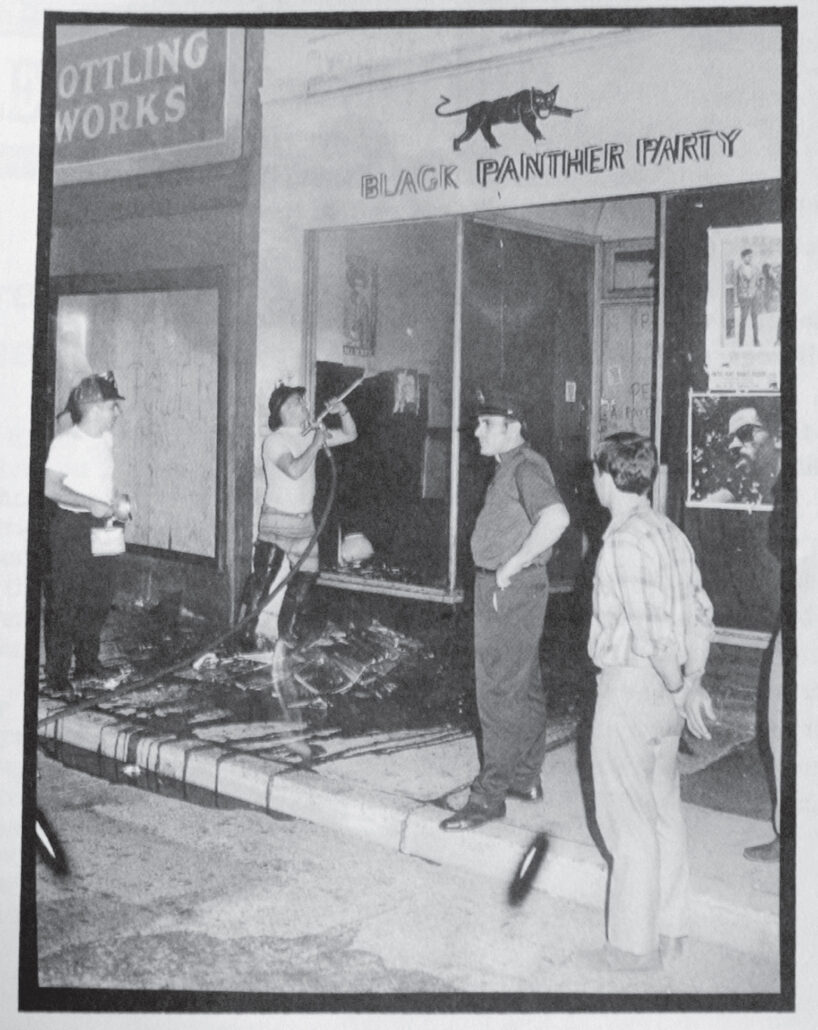
Albany/Peekskill, 2007
Inkjet prints
During the late 1960s, the Black Panthers kept an office in Peekskill, New York, while organizing their Free Breakfast Program and political education classes until 1969 when police attempted to burn their building down. A Black group called the Brothers protested racist hiring practices and published a newspaper called The Albany Liberator from 1967 to 1972. This surprising and little-known history of Black Power in the Hudson River Valley forms the foundation of William Cordova’s Albany/Peekskill, an assemblage of photographs of archival records found in the University of Albany library and elsewhere. In addition, Cordova includes two of his own photographs in this multi-part work, created during his 2007 Woodstock residency. They show the locations of the former headquarters of the Panthers and the Brothers, both demolished. By highlighting the community service of both groups and contrasting these social programs with the violence the organizations endured, Cordova highlights the challenges of progressive political activism in American culture.
LaToya Ruby Frazier
American, born 1982
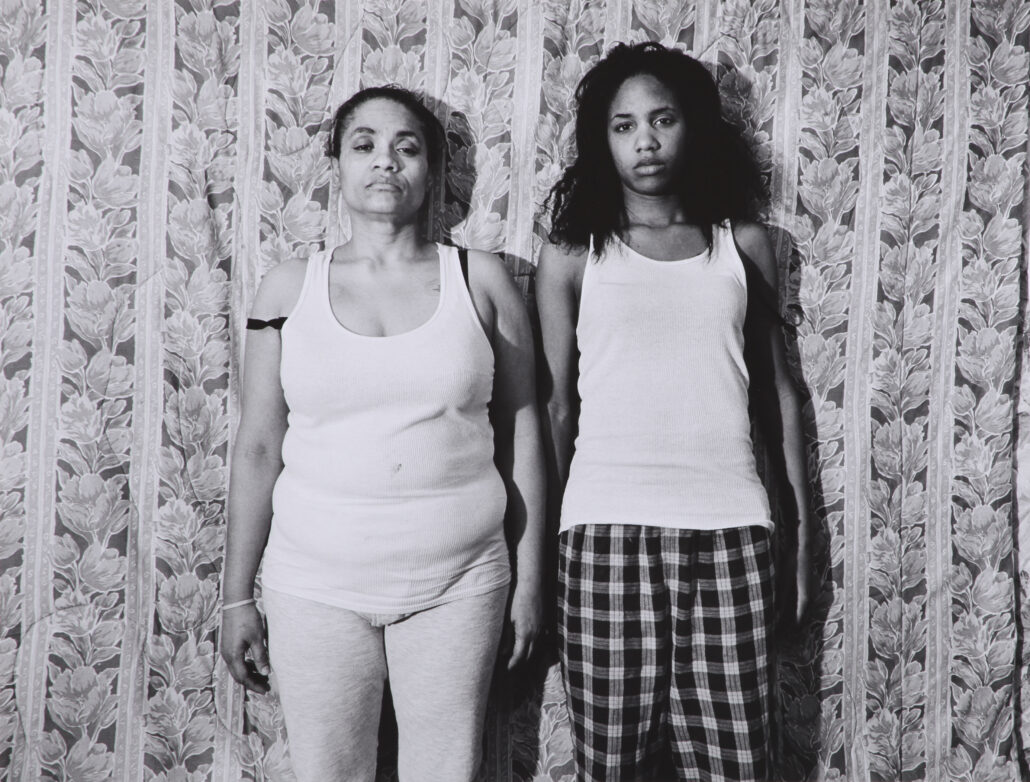
Momme Portrait Series (Floral Comforter), 2008
Gelatin silver print
Growing up in 1980s Braddock, Pennsylvania, a gritty, steel-producing suburb of Pittsburgh, LaToya Ruby Frazier began photographing her family and neighborhood at the age of sixteen. As Braddock deindustrialized, she and her family were regularly exposed to dangerous chemicals and particulates living in close proximity to the region’s last surviving steel mill. Frazier’s documentary photographs include self-portraits, portraits of her mother and grandmother, and records of their domestic space, interweaving the fate of a Black family with a political allegory about the environmental and physical degradation of their town. She made images not as a dispassionate outsider, but as a vulnerable insider and participant, calling her work “conceptual documentary art.” Printed during her 2008 Woodstock residency, these photographs were published in 2013 as the Aperture monograph “The Notion of Family.”
Tommy Kha
American, born 1988
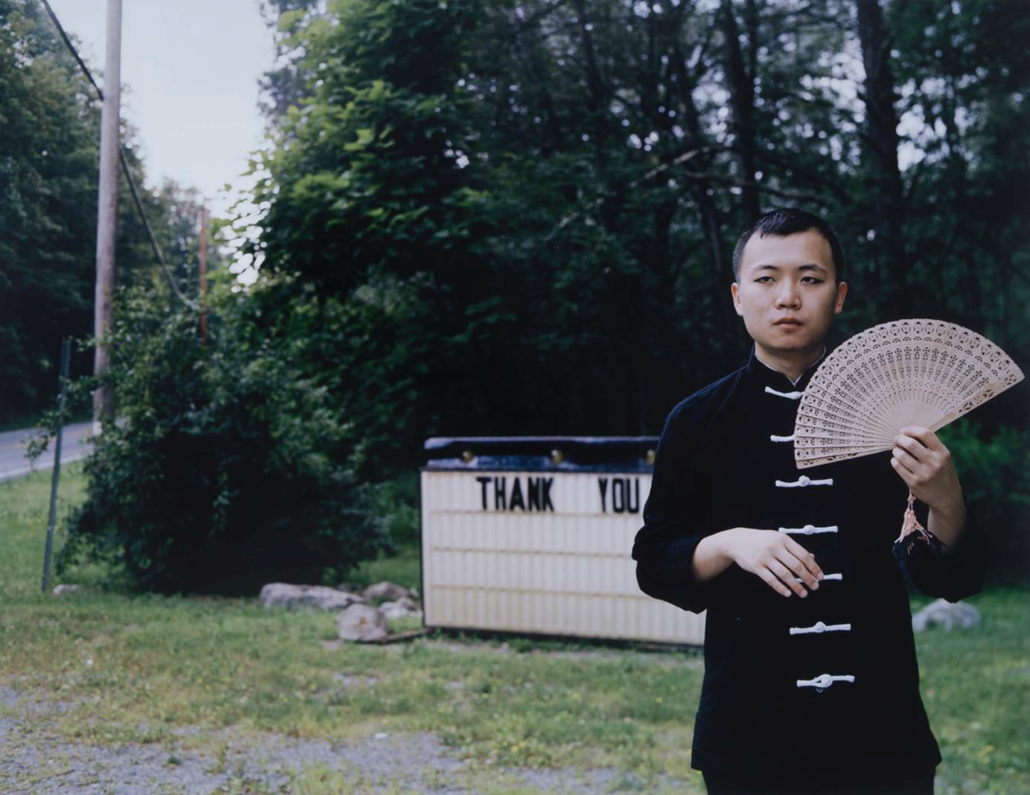
Little Polite, West Hurley, NY, 2011
Chromogenic print
In Little Polite, West Hurley, NY, Tommy Kha confronts the subject of “yellowface,” the harmful practice in Western media, in particular film and theater, where Caucasian actors use makeup or prosthetics to play East Asian characters, relying on pre-existing stereotypes to guide their flawed interpretation. During his 2011 residency, Kha created a series of self-portraits like the one presented here, using theatrical makeup, props, costumes, and expressions to lampoon the stereotypes long used to dismiss or denigrate people of East Asian descent. This project, called “American Knees,” prefigures Kha’s more recent work, in which he explores the formation of his own racial, sexual, and generational identity as a Chinese-American man.
Deana Lawson
American, born 1979
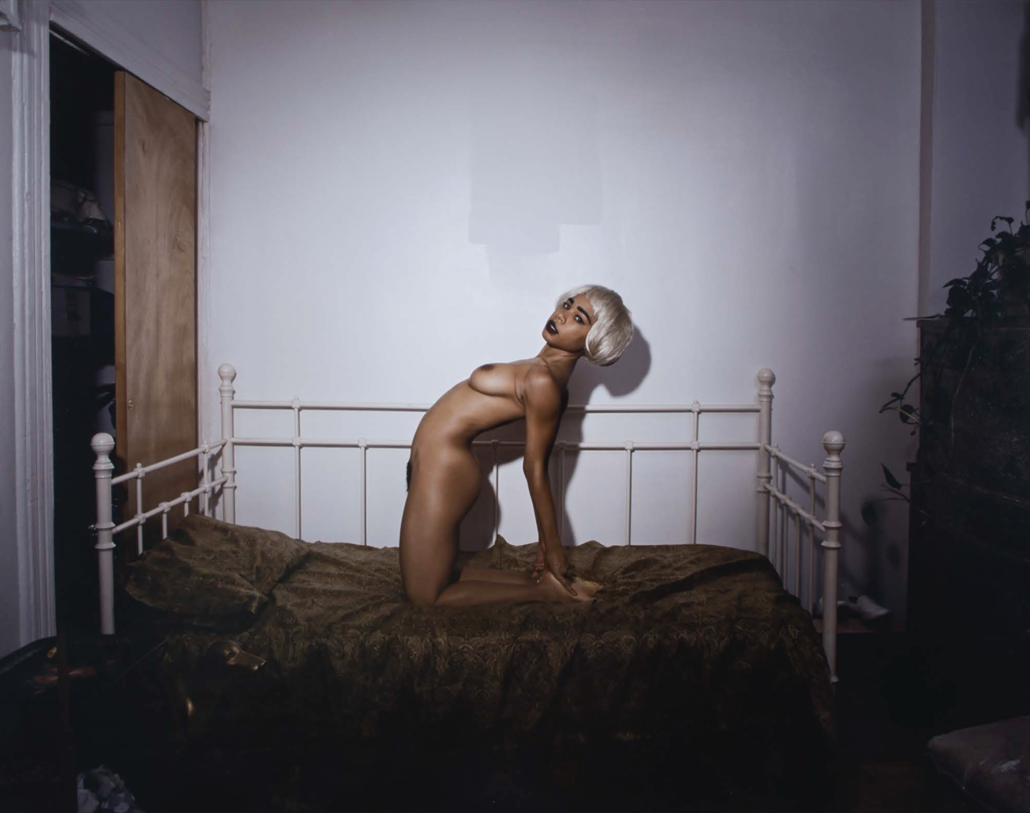
Daonne, 2012
Inkjet print
Deana Lawson is known for photographing Black individuals in domestic settings, utilizing meticulous staging and posing in her portraiture. Collaboration powers her artistic practice, as each portrait session is an event, an opportunity to explore the selfhood of the person in front of the lens, as well as her own. “I photograph family, friends, and strangers,” says Lawson, “and I operate on the belief that my own being is found in union with those I take pictures of.” With her unusually confrontational style, Lawson implicates herself and the subject, but also transfers that challenge to the viewer confronting her photograph. The tension between truth and fiction is key to this triangulated encounter, as it opens a metaphorical, nonliteral space for her to explore the spiritual, sexual, mystical, and psychological impact of the African diaspora, and the way these conflicted ideas are expressed in the human body.
Yijun “Pixy” Liao
Chinese, born 1979
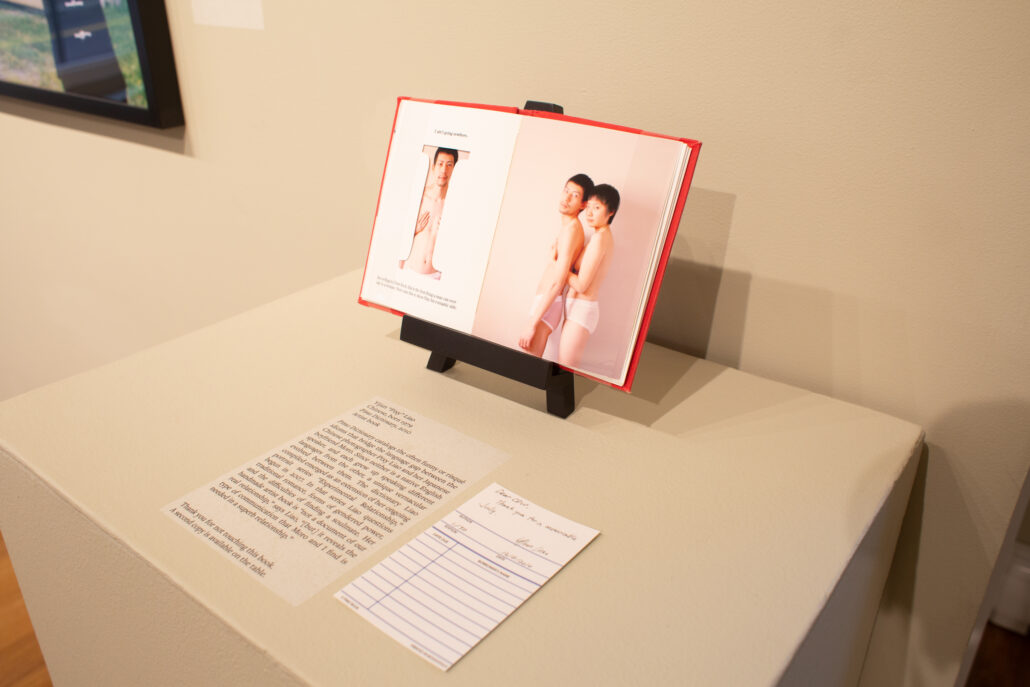
Pimo Dictionary, 2010
Artist book
Pimo Dictionary catalogs the often funny or risqué idioms that bridge the language gap between the Chinese photographer Pixy Liao and her Japanese boyfriend Moro. Since neither is a native English speaker, and each grew up speaking different languages from the other, a unique vernacular evolved between them. The dictionary Liao compiled emerged as an extension of her ongoing portrait series “Experimental Relationship,” begun in 2007. In that series Liao questions traditional romance, forms of gendered power, and the difficulties of finding a soulmate. Her handmade artist book is “not a document of our real relationship,” says Liao, “[but] it reveals the type of communication that Moro and I find is needed in a superb relationship.”
Dawit Petros
Eritrean, born 1972
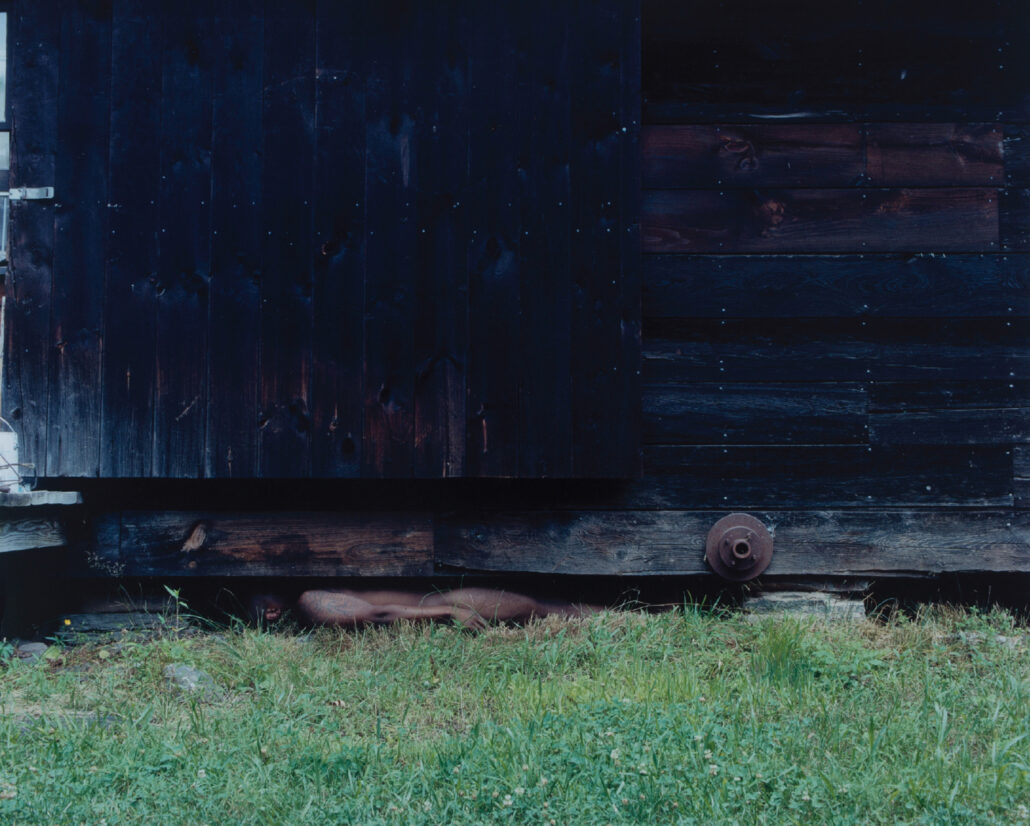
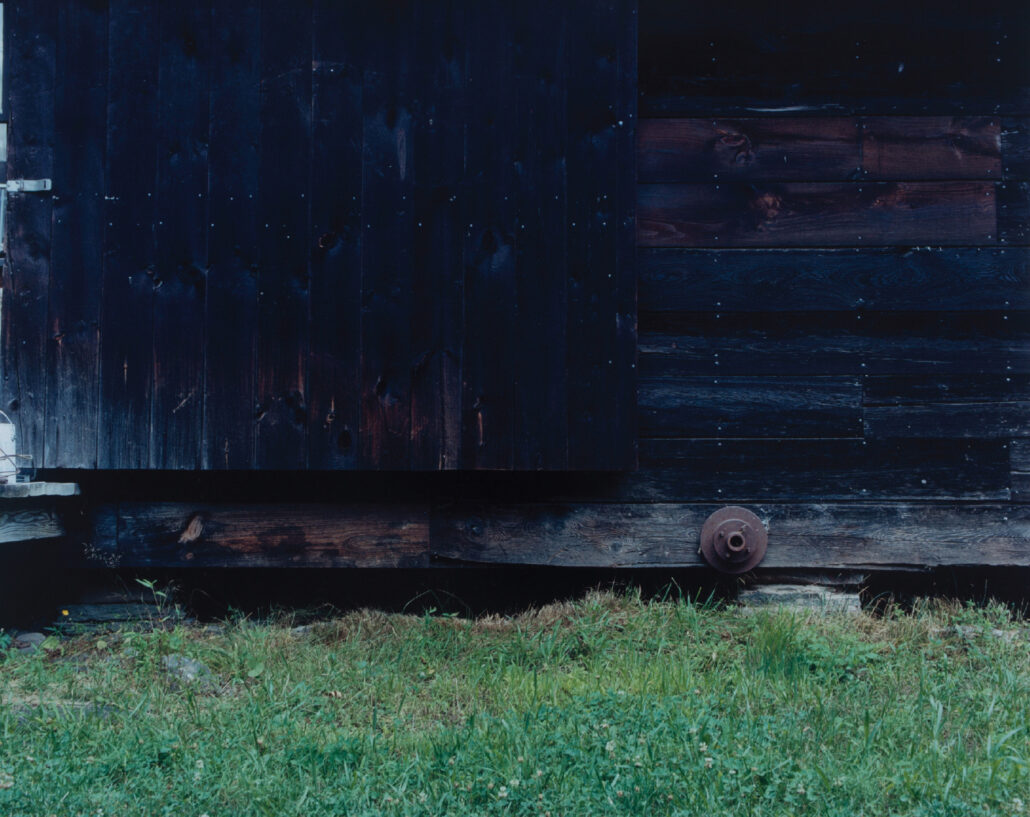
Support Structure as Me, 2007
Chromogenic prints
Exploring the dichotomy of presence and absence, Dawit Petros created a project called “Mimesis (The Woodstock Series)” during his 2007 residency. Using repetition as a formal device, Petros investigates personal and cultural memory, and the relationship between setting and subject – in this case, the artist himself. The title of this diptych, Support Structure as Me, emphasizes the artist’s presence in the first image and his absense in the second. One must wonder about the artist’s abrupt disappearance and its possible effect on the integrity of the structure that was bearing down on him. “The process of subsuming one’s self into an environment through the faculty of imitation,” says Petros, “raises questions of affinity and reciprocity between oneself and one’s context.”
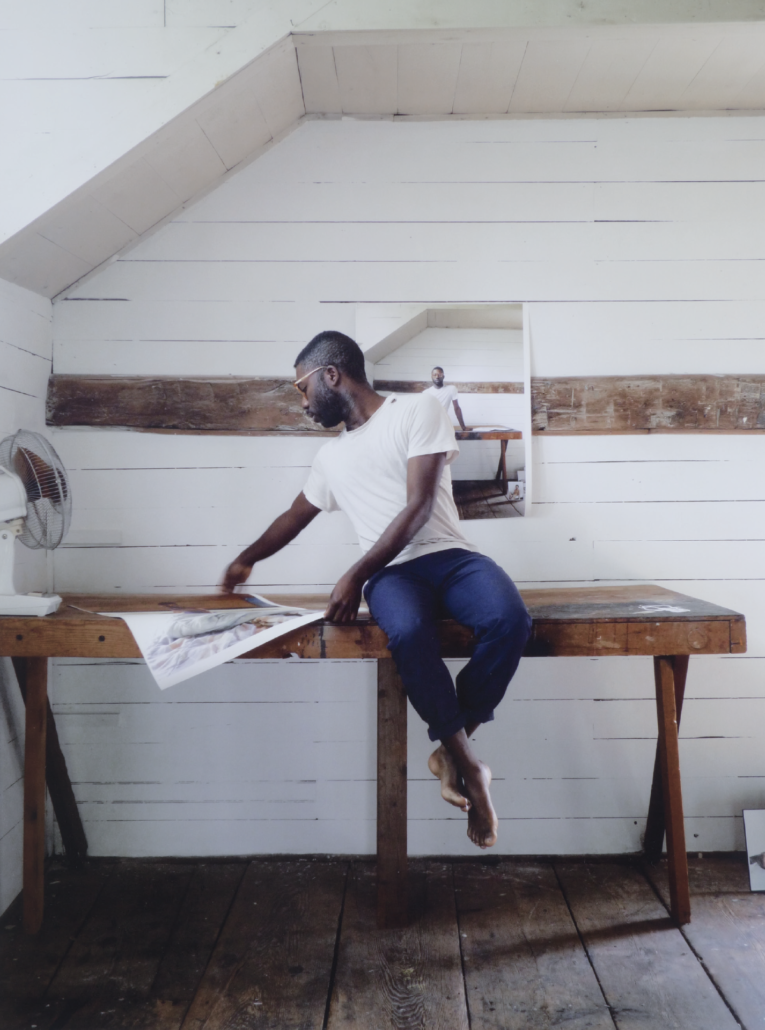
Paul Mpagi Sepuya
American, born 1982
Self-Portrait After, 2010
Inkjet print
While Paul Mpagi Sepuya was living in Woodstock during his 2010 residency, he maintained regular correspondence with a friend named Matija. Over the course of his stay, Sepuya received snapshots Matija had made of the artist’s vacant home and bedroom in Brooklyn. He printed, reworked, and rephotographed these snapshots and used his residency to focus on photography’s most essential qualities, its reproducibility, and in particular, the way it can be used to examine the connections between people. Exploring aspects of collaborative self-portraiture, “I make photographs about the act of portrait making,” says Sepuya. “It is about meetings, and how the practice of art-making seeks to construct and define relationships.”
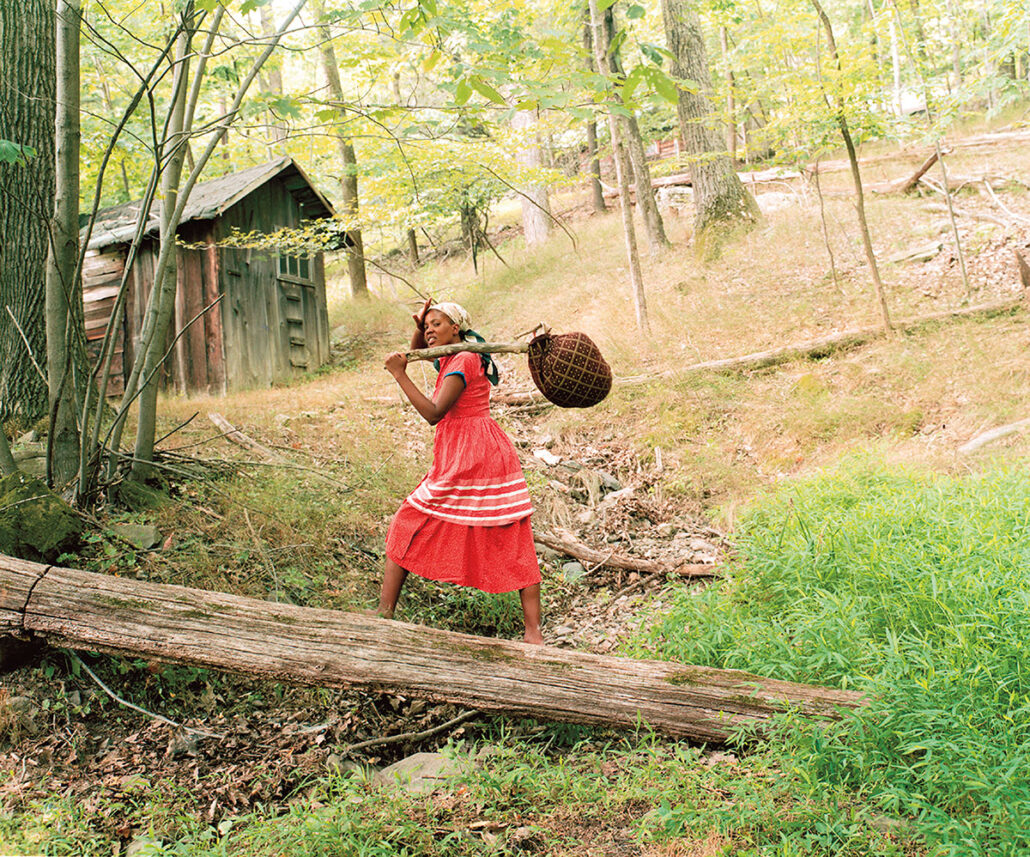
Xaviera Simmons
American, born 1974
Untitled #6, 2007
Chromogenic print
Xaviera Simmons adopts in her self-portraits unyielding fictional identities to explore the intricate symbolism of the Black experience in America. Simmons often places herself in landscapes that complicate the traditional understanding of Black archetypes. In this work, for example, she appears barefoot and fatigued, trudging in front of a decrepit cabin in the woods, a bundle on a stick over her shoulder. Simmons here assumes the identity of a Reconstruction era sharecropper, referencing American South when Black discovered, to their horror, that any progress would be undone by the descending veil of Jim Crow. “How might our entire history have been different had America fulfilled its emancipatory promises to its freed slaves and their descendants,” says Simmons, “instead of commemorating its defeated Confederate planters?”
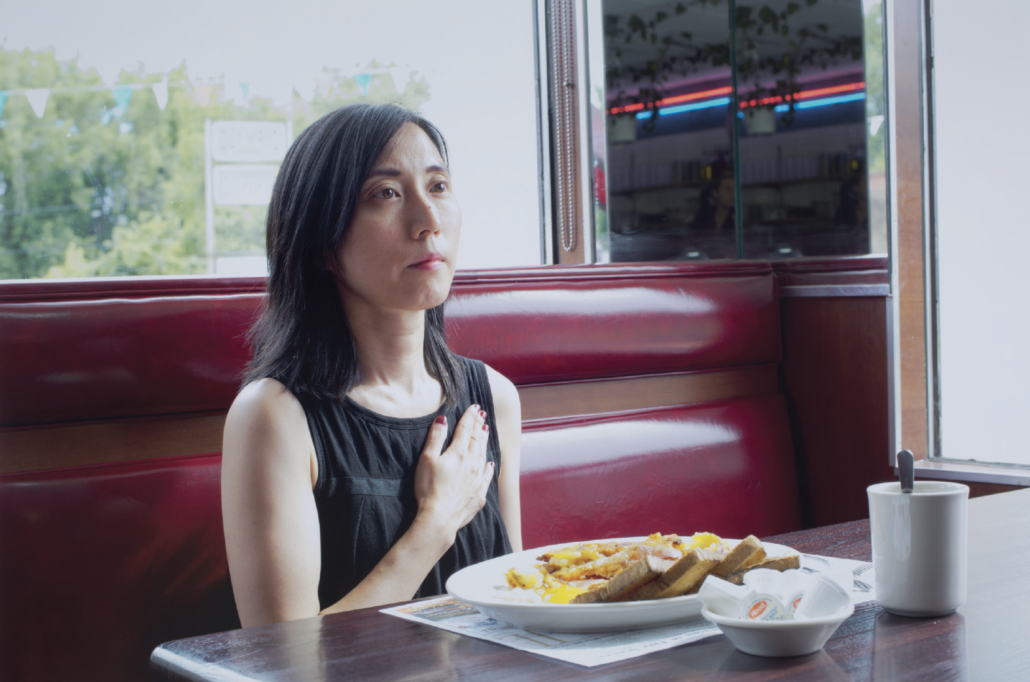
Joanna Tam
American, born China, 1972
Untitled, 2013
Inkjet print
Joanna Tam’s series “Manner of Delivery” is a response to the way patriotism is transmitted during the immigrant naturalization process. During her 2013 residency, Tam made a series of self-portraits in which she holds her right hand over her heart in mundane settings. Taken out of context, the gesture appears strange, despite being the country’s most recognizable patriotic symbol. The series title comes from Title 4, Section 4 of the Code of Laws of the United States, which specifies the Pledge of Allegiance to the Flag and its “manner of delivery.” Considered in light of recent anti-Asian violence, Tam’s work is a powerful challenge to the exclusion of minorities, and the looming demand that they demonstrate their loyalty at any given moment.
Header Photo © LaToya Ruby Frazier, Momme, 2008