
Tamara Abdul Hadi, Alan Chin, Naomieh Jovin, Billy H.C. Kwok, Qiana Mestrich
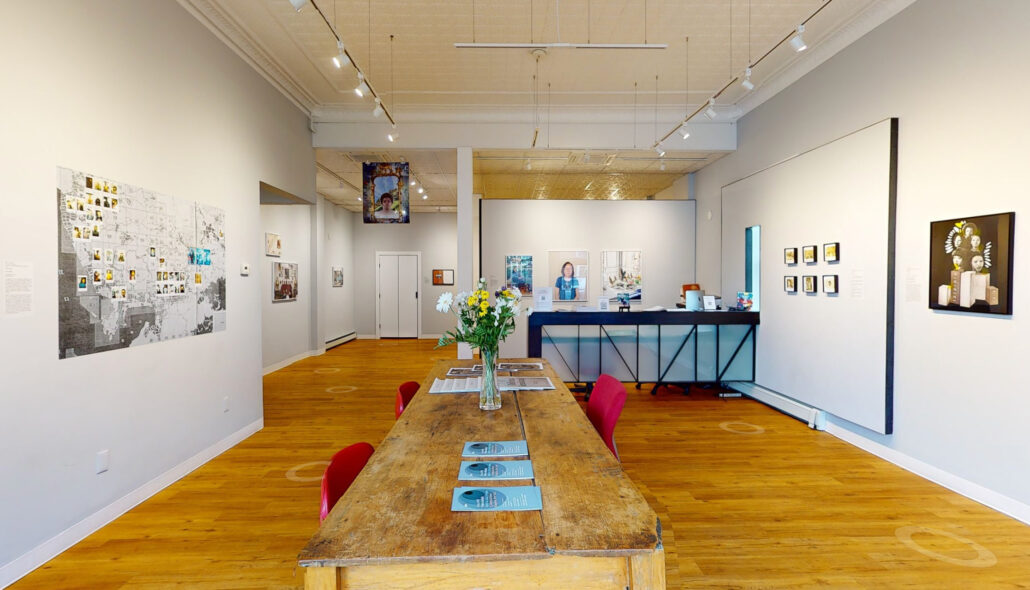
In partnership with Magnum Foundation, CPW presents a group exhibition of five international contemporary photographers. “Counter Histories” includes artists Tamara Abdul Hadi, Alan Chin, Naomieh Jovin, Billy H.C. Kwok, and Qiana Mestrich. These artists confront difficult histories by reconstructing perspectives that have been omitted from previously accepted or official accounts. Their deeply personal visual narratives are reconstructed out of found images derived from family photo albums, books, magazines, or community archives. The works in “Counter Histories” ask probing questions about our construction of the past, such as, What new meanings are suggested by the absences and silences one finds in archives and historical records? How can artists engage with histories that are not photographed? How can these revisionist archives contribute to fuller understandings of the past and future?
The installation, coordinated by CPW curator Marina Chao, will be on view at CPW, 474 Broadway, Kingston, from March 23, 2024 through May 26, 2024.
The following artists’ books and zines by Counter Histories fellows are also on view in the exhibition: aka TAWLA, Tarweedeh (2023); Christopher Gregory-Rivera, El Gobierno Te Odia (2023); Tamara Abdul Hadi, Picture an Arab Man (2022); Marilyn Nance, Last Day in Lagos (2022); Alice Proujansky, Hard Times are Fighting Times (2023); and Agata Szymanska-Medina, Deformacja Demokracji / The Deformation of Democracy (2023).
Counter Histories is organized by Magnum Foundation with the support of The Henry Luce Foundation. The exhibition is accompanied by the Spring 2024 issue of Aperture magazine, “Counter Histories,” produced in collaboration with Magnum Foundation.
Additional support for the Counter Histories Initiative is provided by The Fledgling Fund, the Phillip and Edith Leonian Foundation, the Andrew W. Mellon/ACLS Early Career Fellowships, the William Talbott Hillman Foundation, and Columbia University’s Brown Institute for Media Innovation.
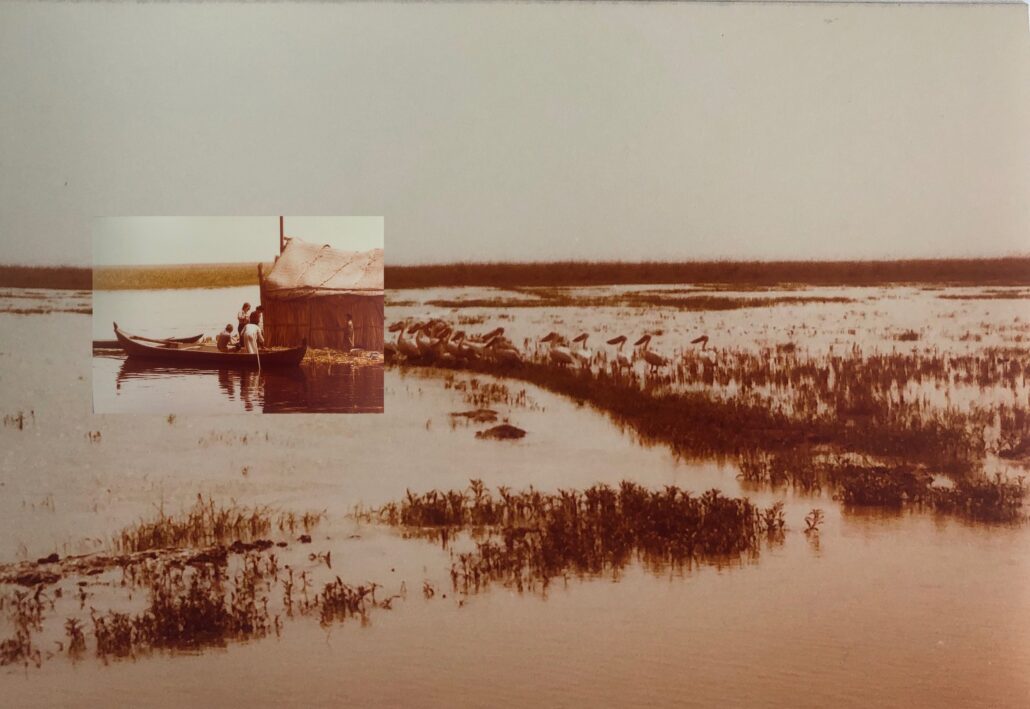
Tamara Abdul Hadi
Re-Imagining Return to the Marshes, 2020–ongoing
The 1977 book Return to the Marshes: Life With the Marsh Arabs of Iraq (Gavin Young, with photographs by Nik Wheeler) sat in Tamara Abdul Hadi’s childhood home and influenced her imagination of Iraq, the Marshes, and their people. Through this new body of work, she re-examines the photographic representations of the Iraqi Marshes found in the original book through her own photography and through images made by her father and by Iraqis, both in the country and the diaspora. The project asks how histories can be colonized, even in the imagination, and explores the anti-colonial potential of photography.
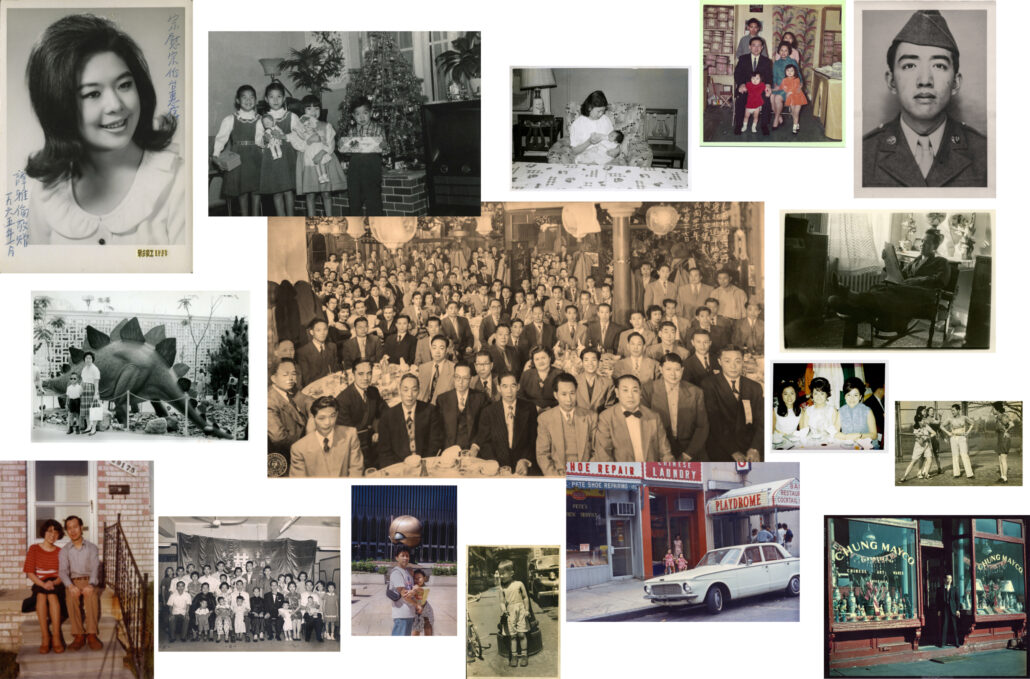
Alan Chin
Chinese American Photo Album, 2023
Sourced through an ongoing open-call for Chinese Americans in New York to share their intergenerational family histories, this archive brings together troves of photographs and ephemera that document the role of Chinese Americans in the larger history of immigration in the United States. Alongside a zine that weaves in Alan Chin’s own family history, the images personalize the experiences of Chinese American immigrants and presents a 20th century visual history of New York City defined by their presence.
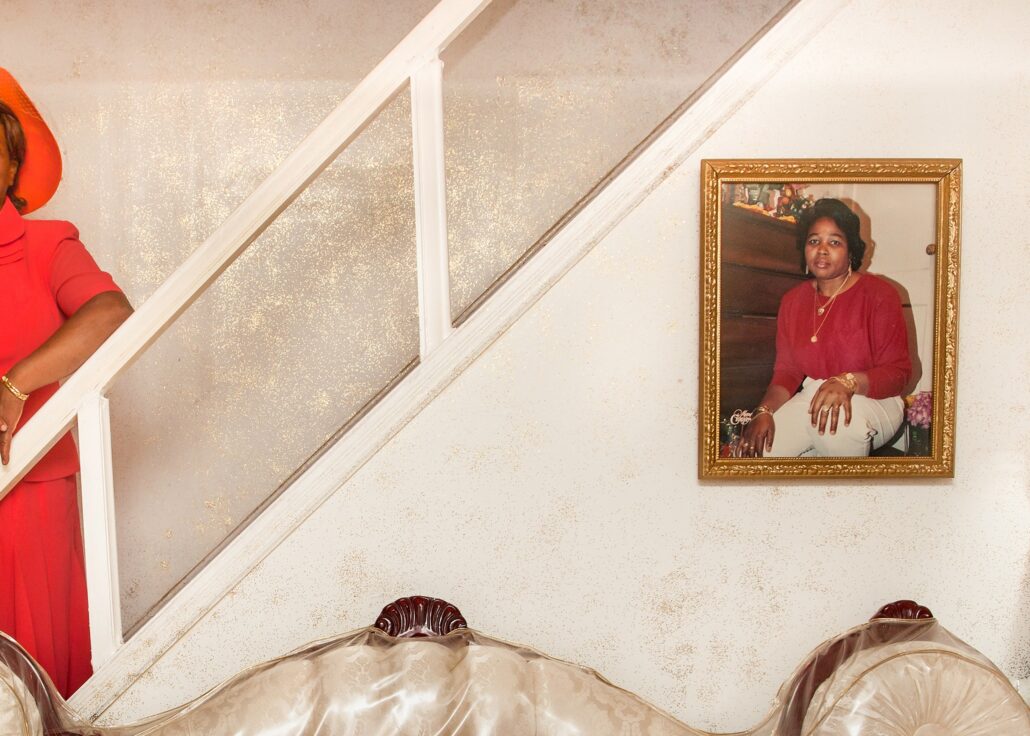
Naomieh Jovin
Gwo Fanm, 2017–ongoing
There is a name in the Haitian Creole language for women like my mother: “Gwo Fanm.” Literally, “Big Woman,” a Gwo Fanm is a woman who stands out in life and stands up for the ones they love. But a Gwo Fanm is also a woman who takes more than their fair share of the slings and arrows this world throws at them, absorbs hurt and pain that could crush less resilient or determined people.
Incorporating images from family albums, original photography, and voice memos, this project reflects the compounding losses felt by the women in Naomieh Jovin’s Haitian-American family as they grieve the community they leave behind, and the loss of their personal and collective history through migration. By reclaiming images her family made during their lifetimes, Jovin hopes to forestall this loss—to show the purpose and honor that defined their lives; to see her ancestors as her guides through this world; and to actively create a new narrative and visual archive for her generation.
Qiana Mestrich
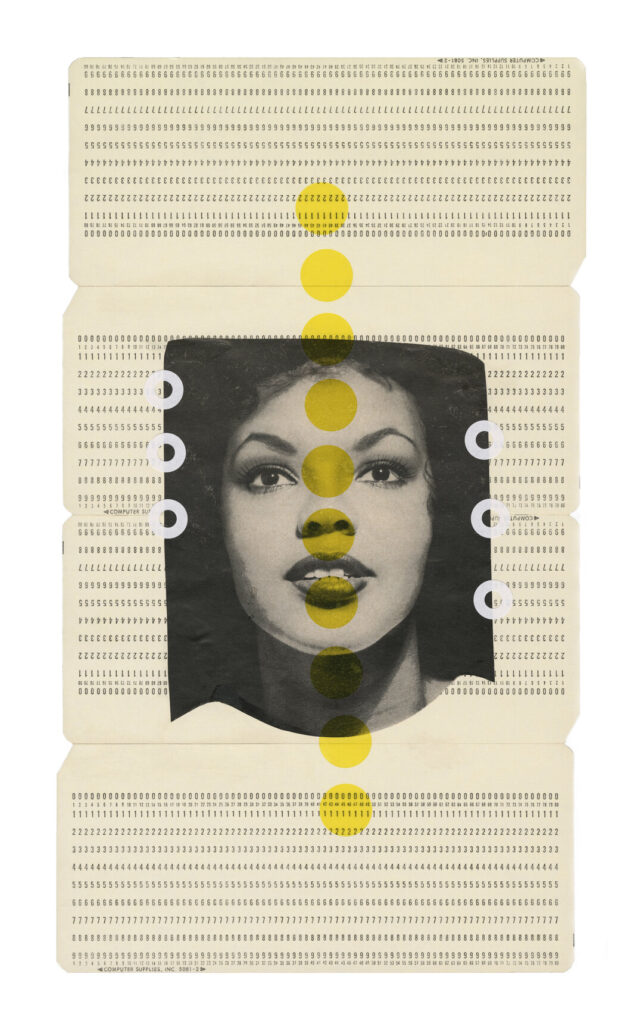
@WorkingWOC: Towards a History of Women of Color in the Workplace, 2022–ongoing
Inspired by images of her mother, who worked in sales at the Rugol Trading Corporation offices in Manhattan in the late 1960s, Qiana Mestrich began this project as a community-driven archive visualizing the labor of women of color in the American workforce. Limited by the minimal archival materials she could find, Mestrich created her own speculative representations of the labor history of Black women and other women of color—who, despite the Civil Rights Act of 1964, continue to lack representation in leadership roles, receive minimal support for career advancement, face day-to-day race and gender discrimination, and consistently earn less than their white counterparts. Through collages of archival images from fashion and office supply magazines, she intervenes in this gap in the historical record to center these women’s agency and pursuit of financial independence within global capitalism.
Billy H.C. Kwok
For So Many Years When I Close My Eyes, 2023
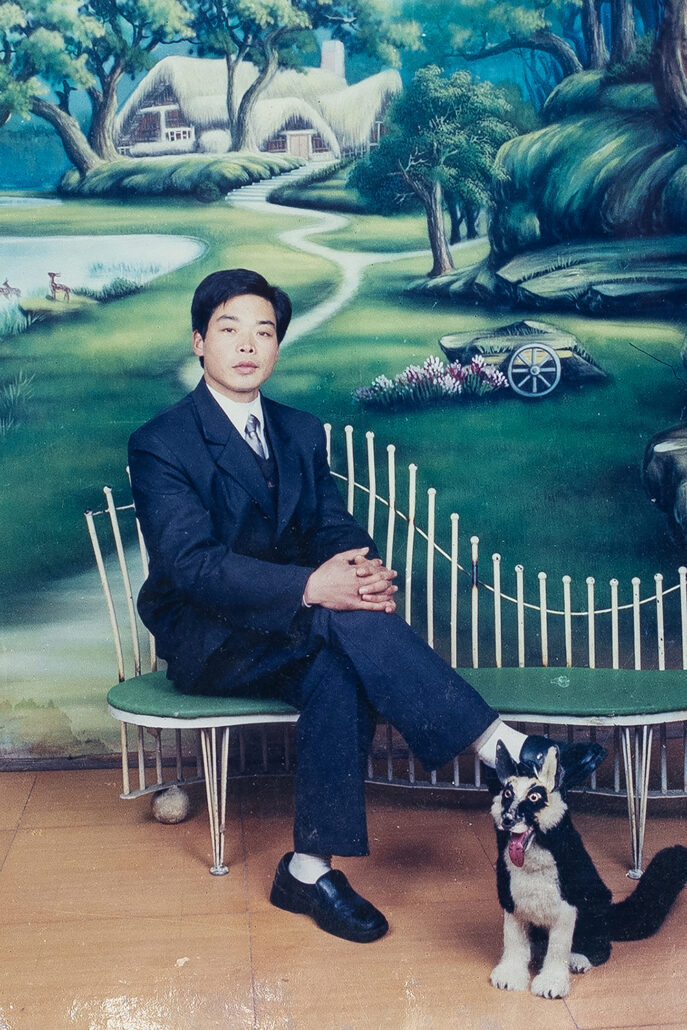
On August 24, 2000 Yu Man-Hon, a fifteen-year-old boy with autism, was separated from his mother Yu Lai Wai-Ling in Hong Kong and disappeared after he was subsequently deported to mainland China. Yu Man-Hon’s disappearance was a major news story; occurring just three years after the transfer of Hong Kong from the UK to the People’s Republic of China, it unfolded alongside a new, uncertain dynamic between the adjacent but long separated cultures. Billy H.C. Kwok has been meeting with Yu’s mother since 2022, speaking to her about her memories of her son, referencing the extensive archive she has amassed in the 23 years since he went missing, and making his own photographs in response. She keeps the hundreds of annotated instant photographs she has made of young, unhoused men in cities across China as she searches for her son, who, unable to care for himself, may be living on the streets. She also has numerous letters, accompanied by studio portraits, sent by men who claim to be Yu Man-Hon or are offered as a replacement for him.
Counter Histories
Virtual exhibition
Banner image © Billy H.C. Kwok. Studio photograph, from For So Many Years When I Close My Eyes, 2022–23.